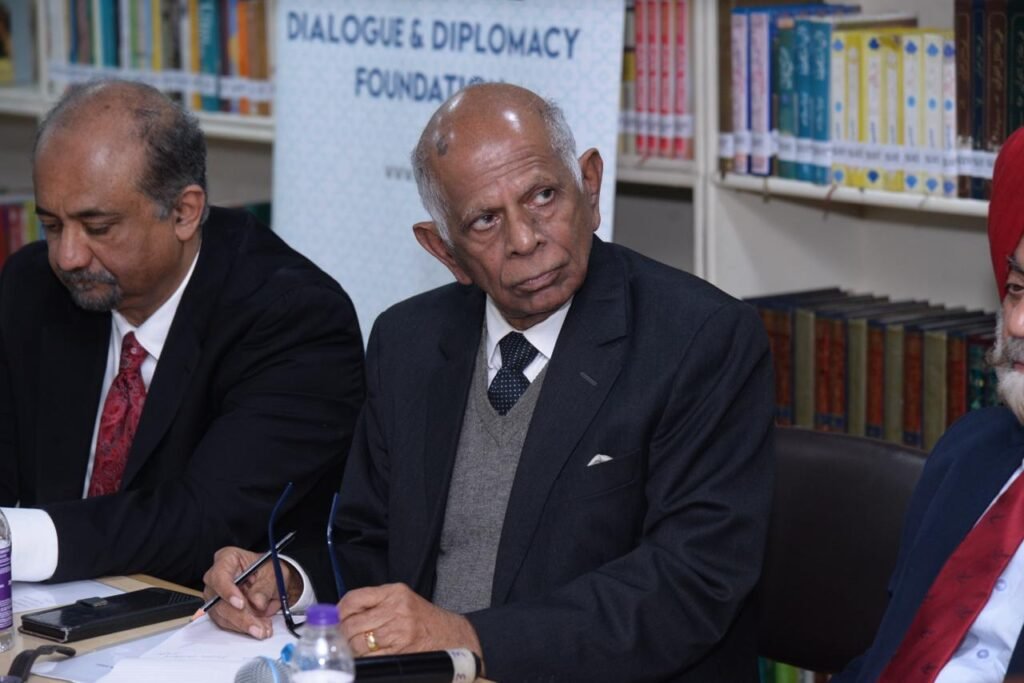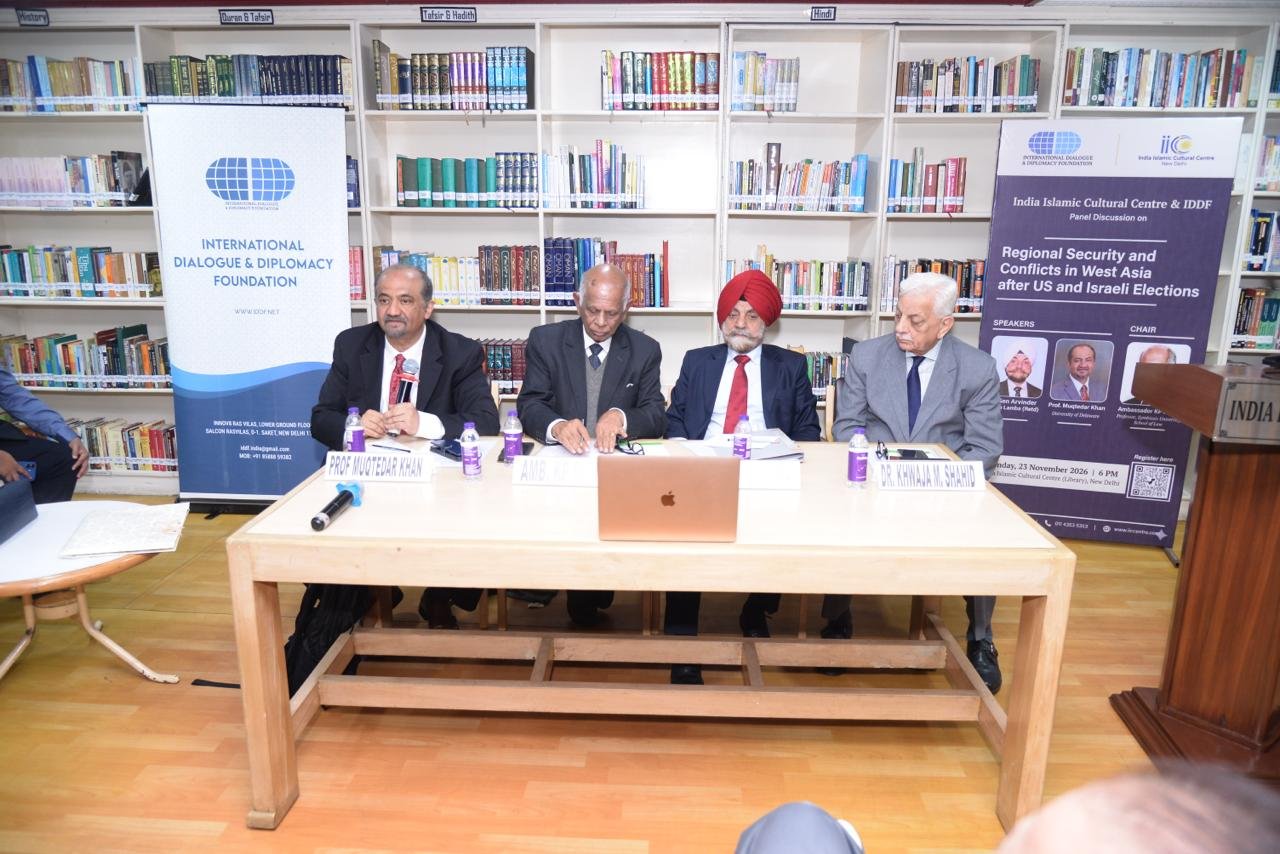
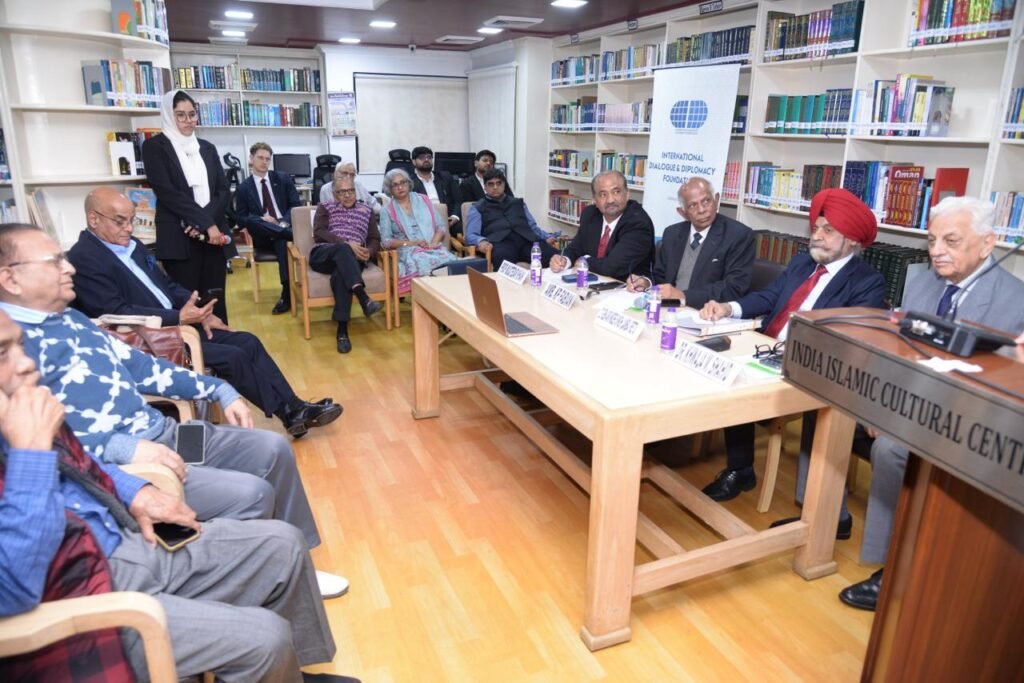
On Monday, November 23, 2026, the International Dialogue & Diplomacy Foundation (IDDF), in collaboration with the India Islamic Cultural Centre (IICC), hosted a panel discussion titled “Regional Security and Conflicts in West Asia after US and Israeli Elections” at the IICC Library in New Delhi. The session was chaired by former Indian diplomat Ambassador KP Fabian (Distinguished Visiting Professor, Symbiosis International University) and featured keynote addresses by Prof. Muqtedar Khan (University of Delaware) and Lt Gen Arvinder Singh Lamba (Retd) (former Vice Chief of the Army Staff and IDDF Governing Council member).
Opening the discussion, Prof. Muqtedar Khan examined the transformative outcomes of the recent US midterm and Israeli elections. He noted that sweeping Democratic victories in the US marked by significant progressive gains and shifting voter demographics have substantially constrained the White House’s domestic agenda and are expected to trigger heightened congressional scrutiny over military aid to Israel and the ongoing conflict with Iran. Turning to regional realignments, Prof. Khan observed that perceived unreliability in Washington’s security guarantees has prompted West Asian nations to diversify their strategic partnerships, highlighting emerging frameworks like the Mecca Defense Pact and the R4+E4 dialogue. He also addressed the domestic constraints facing the Israeli government following electoral gains by Arab parties, while urging India to leverage its diplomatic goodwill across the region to play a more proactive mediating role.
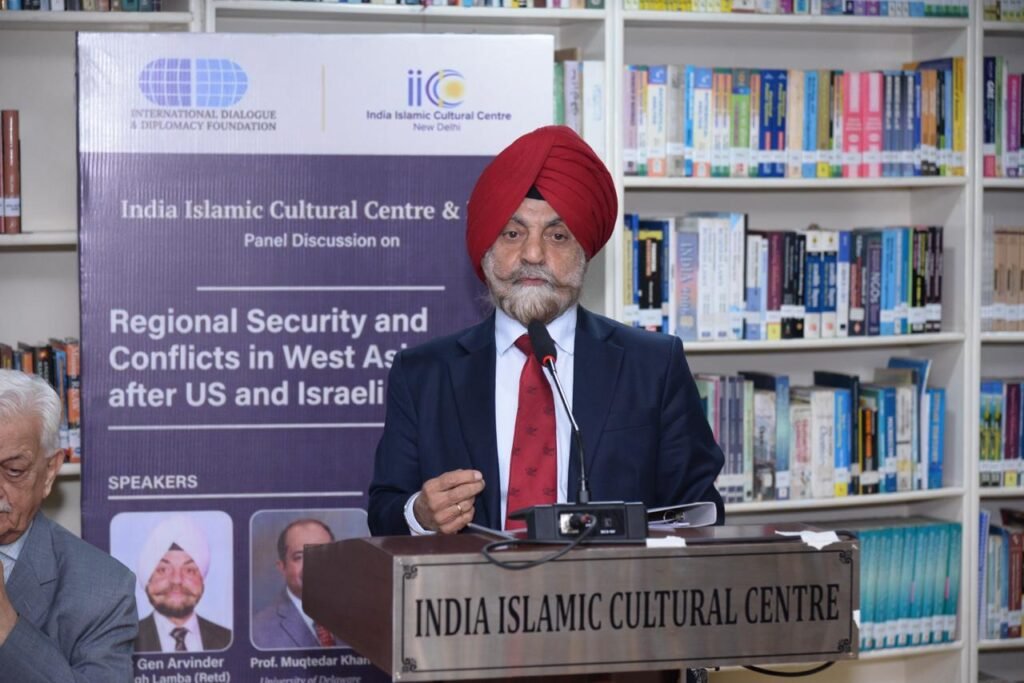
Lt Gen Arvinder Singh Lamba (Retd) provided a military and strategic assessment of the ongoing US-Iran conflict, describing the current trajectory as a volatile state of “no war, no peace.” He emphasized that Iran has demonstrated significant resilience against overwhelming air and naval power, aided by asymmetric warfare capabilities and technological backing from China and Russia. Gen. Lamba noted that the failure of maximalist military objectives within short timelines has exposed the limits of conventional deterrence, eroding confidence among Gulf states in the United States as a sole security guarantor and signaling prolonged regional instability.
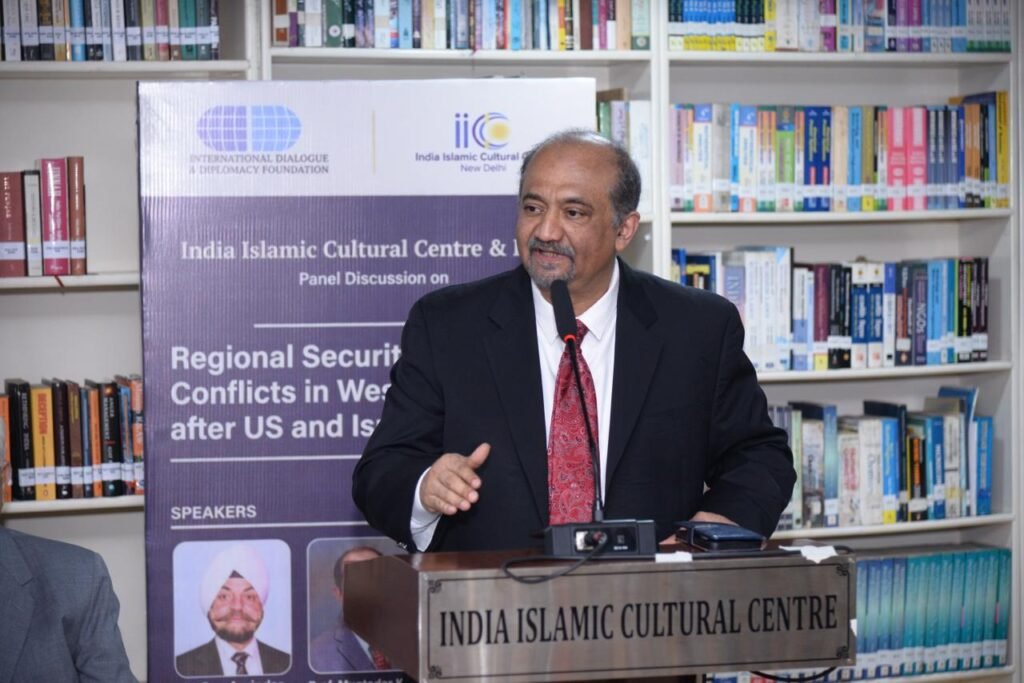
In his concluding remarks, Ambassador KP Fabian critiqued the strategic miscalculations driving the conflict, arguing that asymmetrical wars cannot be resolved through air superiority alone without understanding regional historical and ideological dynamics. He underscored the importance of reviving multilateral diplomacy and questioned double standards in international responses to ongoing crises in Gaza and West Asia.
The event concluded with an interesting and engaging Q&A session, during which the panelists fielded thoughtful questions from the audience on US domestic political shifts, the long-term viability of regional defense pacts, India’s diplomatic positioning, and the prospects for lasting peace in the Middle East.